
Managing ADHD Shutdowns in the Luteal Phase: Cycle Syncing and Perimenopause Relief
Luteal Phase Fluctuations: Why Perimenopause Turns Up the Volume on ADHD Overwhelm (and What to Do About It)
The Quiet Power—and Challenge—of the Luteal Phase
If you’re a woman navigating perimenopause with ADHD, you already know: the days after ovulation and before your period (the luteal phase) can feel like an emotional and cognitive rollercoaster. Surging and crashing hormones don’t just shift moods—they directly tangle with dopamine, amplifying the very ADHD symptoms you’ve learned to juggle.

What Actually Happens in the Luteal Phase?
After ovulation, as estrogen drops and progesterone rises (before its own tumble, pre-period), a storm brews: impulsivity, brain fog, forgetfulness, mood swings, and even PMDD (premenstrual dysphoric disorder) become harder to ignore. Perimenopause makes these shifts more intense, unpredictable, and draining—emotionally and physically.
How ADHD Shutdowns Change With Your Menstrual Cycle (Especially in Perimenopause)
- Energy tanks and motivation vanishes before your period.
- Focus? Gone. Even daily routines feel like climbing Everest.
- Emotional volatility, irritability, and sensitivity rise, affecting work and relationships.
- Perimenopause means not every cycle is the same—phase lengths, ovulation, and hormone effects can all become wildcards.
How ADHD Shutdowns Intensify Across Your Cycle (Especially Luteal Phase & Perimenopause)
The luteal phase is when menopause and neurodivergence collide—and for women with ADHD, this convergence can feel uniquely destabilizing. Here’s why:
The Hormone–Dopamine Connection

- Estrogen:
Peaks in the first half of your cycle, acting as a natural “dopamine booster” that helps with focus, motivation, and emotional steadiness. When it drops after ovulation, the brain’s capacity to regulate dopamine weakens, making standard ADHD symptoms (impulsivity, distractibility, disorganization) much harder to manage[1][2].
- Progesterone:
Surges in the luteal phase, initially calming but soon blunting dopamine’s effects even more as it peaks and then plunges before menstruation. Many women describe this as a “neurochemical fog,” where their ADHD medication feels less effective and emotional regulation evaporates[3][4]. Yay.
The Luteal Shutdown Cycle
- Energy tanks:
Dopamine drops, lowering both physical drive and “reward” signals in the brain. Tasks that were manageable last week feel nearly impossible; fatigue is both mental and physical, not just “laziness.”
- Executive function goes offline:
You might suddenly “blank out” on next steps, conversations, or routine tasks—your brain literally cannot hold instructions, lists, or timelines, and overwhelm can spiral into shutdown or paralysis.
- Emotional volatility and sensitivity:
Fluctuating hormones jack up emotional sensitivity, activating the threat and rejection systems in the ADHD brain (rejection sensitivity dysphoria hits hardest here), turning minor setbacks into “crises” and amplifying relationship tension[5][6].
- Motivation vanishes and focus fragments:
Dopamine-regulated motivation collapses—even daily routines feel impossible. Procrastination, unfinished chores, and “who even started this project?” inertia are frequent visitors.
- Shutdown and withdrawal:
Many find themselves retreating, canceling plans, or “doom scrolling” while everything feels both urgent and unfixable. This isn’t just a bad mood—your biology has temporarily lost the fuel to function[7][8][2].
Why Perimenopause Makes It Worse

In perimenopause, hormonal rhythms become unpredictable—phase lengths change, ovulation is irregular, and the “rules” you’ve used for symptom management can suddenly stop working. Estrogen deficits are deeper, progesterone spikes are less predictable, and dopamine’s already-wobbly balance gets even less stable, so ADHD shutdowns and emotional slips become more frequent and severe.
The Hopeful News: Rhythmic, Self-Compassionate Adaptation Works
Your Radiant Rhythm Method isn’t just “cycle syncing”—it’s about learning to recognize, validate, and gently adapt to these cyclical shutdowns. By tracking cues (energy, attention, mood) and anchoring your daily actions to your neurobiology—especially using tools like Radiant 5® pillars and compassionate “re-entry” after hard days—you can reduce guilt, forecast your tough days, and build a system that flexes as you do.

- Science meets kindness:
You’re not failing; your brain is asking for different support at different phases. Lowering demands or shifting routines during luteal decline isn’t giving up, it’s working with your design[9][10].
- Micro-reset, not collapse:
When shutdown hits, choose one small win (water, a walk, sunshine, quick note to a safe friend) and let that be enough.
- Reflect and adjust:
Use the end of each cycle to review when and why things spiraled—and update your Rhythm plan accordingly for the next month.
The Radiant Rhythm Method™—Your Hormone-Savvy Self-Care Map
What if instead of fighting your body’s rhythm, you could thrive by working with it? The Radiant Rhythm Method is Radiant Creative Living’s unique protocol for transforming your luteal phase (and every cycle phase) into a time of empowered self-care and sanity.
Here’s how each pillar of the Radiant 5 fits into The Radiant Rhythm Method™ for luteal resilience:
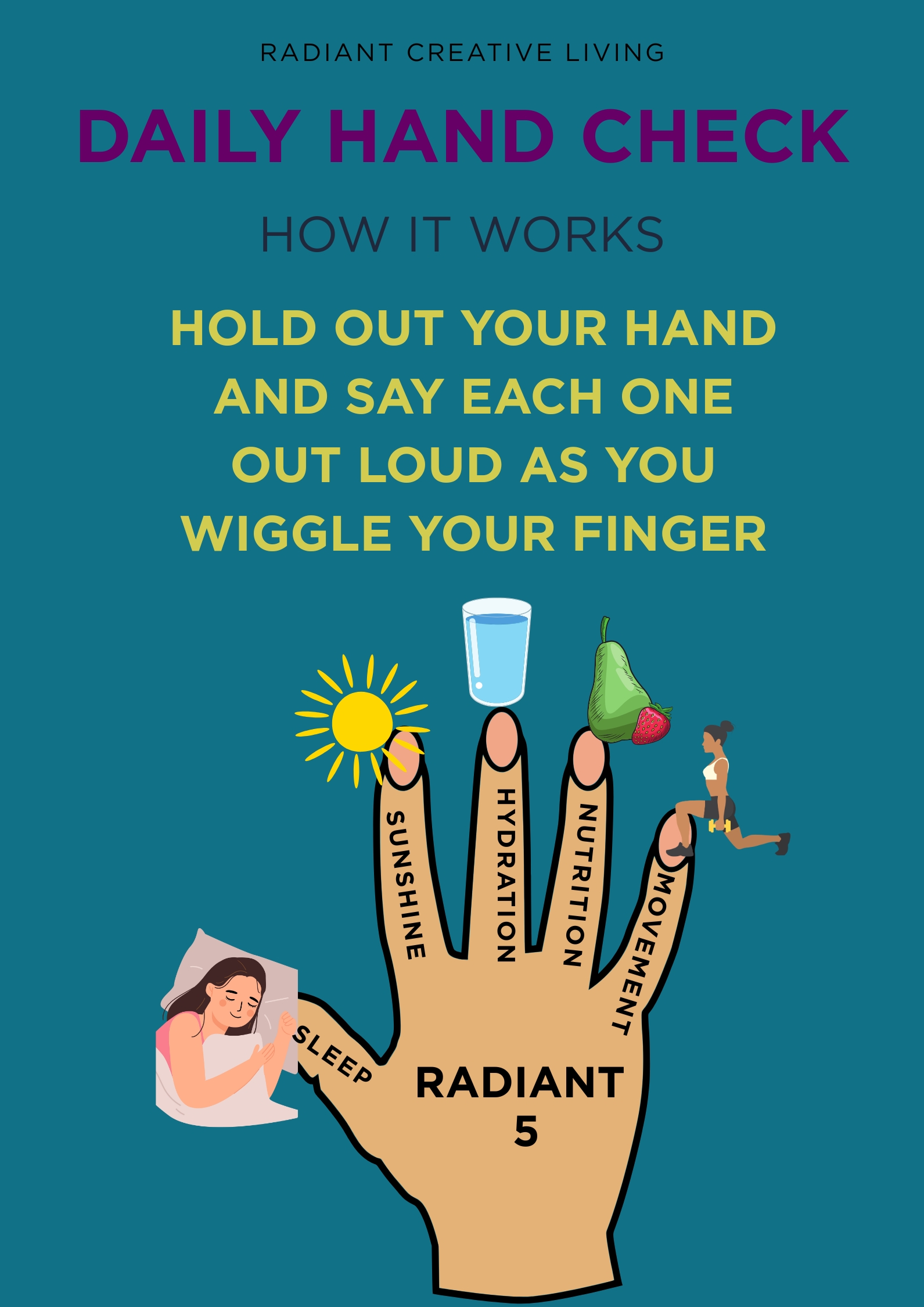
1. Sleep:
Double down on gentle, consistent bedtime rituals to support deeper rest—even (and especially) when hormones work against you.
2. Sunshine:
Soak up light for a mood and clarity boost, helping to stabilize fluctuations in energy and cognition unique to the luteal phase.
3. Hydration:
Boost your water and electrolytes intake to fight bloat, headaches, and fatigue that often peak pre-period.
4. Nutrition:
Focus on magnesium, active B vitamins, and protein-rich foods. Listen to your body’s comfort cravings—nourish, don’t punish.
5. Movement:
Gentle movement trumps intensity: walks, stretching, yoga, or mind-body exercises to keep stress at bay and energy flowing.
Ready to Rewrite Your Story With The Radiant Rhythm Method™?

Perimenopause with ADHD doesn’t have to mean endless overwhelm. The Radiant Rhythm Method gives you the science-backed roadmap to predict, understand, and even leverage your cycle—turning “hard weeks” into windows for growth, rest, and creativity.
Want to learn more? Our exclusive Radiant Rhythm Method guide will be launching soon! Stay tuned for your blueprint to syncing, thriving, and rewriting your midlife story on your terms.
Radiant Rhythm Method™ & Luteal Phase ADHD: Frequently Asked Questions
Q: What is the Radiant Rhythm Method™, and how does it differ from basic “cycle syncing”?
A: The Radiant Rhythm Method™ is a cyclical living framework created by Radiant Creative Living, designed to align your energy, mindset, and habits with the four phases of your menstrual or hormonal cycle. Unlike generic cycle syncing, this method blends science-backed cycle awareness with intuitive life design and creative midlife reinvention. It focuses on individualized tracking, energy mapping, and actionable micro-practices to help women stop fighting their biology and start thriving—especially in perimenopause, when hormonal rhythms can feel unpredictable (see the full method in your free Radiant Rhythm Method Guide.
Q: How do hormonal changes in the luteal phase make ADHD symptoms worse?
A: The luteal phase (after ovulation, before your period) triggers a drop in estrogen and a surge, then crash, in progesterone. These hormonal shifts affect dopamine, influencing brain function, motivation, and emotional regulation—all crucial for women with ADHD. Symptoms like impulsivity, forgetfulness, mood swings, and overwhelm are often most pronounced in this phase, especially during perimenopause when hormonal fluctuations are less predictable[1][2][3][4].
Q: What is the Radiant 5®, and how does it support women in midlife with ADHD or hormonal shifts?
A: The Radiant 5® are five foundational wellness pillars: Sleep, Sunshine, Hydration, Nutrition, and Movement. These daily anchors keep your life stable—even on chaotic days. By focusing on simple wins across these pillars (tracked using your hand as an anchor), you can dramatically improve resilience, mood, energy, and cognition. The Radiant 5® is especially transformative during hormonal transitions, when core routines often get derailed. Explore the full guide here.
Q: How do I know which menstrual phase I’m in—especially if my cycles are irregular in perimenopause?
A: Start by tracking physical and emotional signals—including sleep, mood, cravings, and motivation—using a tracker, app, or journaling. As cycles become irregular, focus on overall patterns rather than “perfect” timing; adjust expectations and self-care based on real-time biofeedback, not a fixed calendar day. The Radiant Rhythm Method™ encourages compassionate flexibility and symptom-based action rather than rigid schedules.
Q: How can I use the Radiant Rhythm Method™ and Radiant 5® together?
A: Map key tasks, goals, and self-care practices onto your four hormonal phases. Use the Radiant 5® as daily touchstones (aim for at least 3 out of 5 pillars daily). During the luteal and menstrual phases, lower the bar for output and shift your energy to completion, reflection, and restoration. During follicular and ovulatory phases, ramp up creativity, visibility, planning, and execution. This integrated approach helps prevent burnout and boosts both wellbeing and productivity.
Q: Are there any resources or expert voices to help me dive deeper?
A: Absolutely! Check out our podcast, including our upcoming conversation with Ammara Wood, ADHD Coach from Blissfully ND, for real-world strategies on navigating hormonal and neurodivergent midlife. Visit our Freebies page for trackers, checklists, and practical tools to start customizing your Rhythm today.
Q: What if I “fall off” the method or miss a routine for a week (or more)?
A: Progress in cyclical living is non-linear. The Radiant Rhythm Method™ and Radiant 5® mantra is “gentle re-entry, not guilt.” Focus on small, immediate wins—pick one pillar or one micro-practice to reset, and celebrate every attempt. Community support, like sharing your progress in our Radiant Creative Community, is also key to sustainable change.
Q: How can I get the Radiant Rhythm Method™ and Radiant 5® guides?
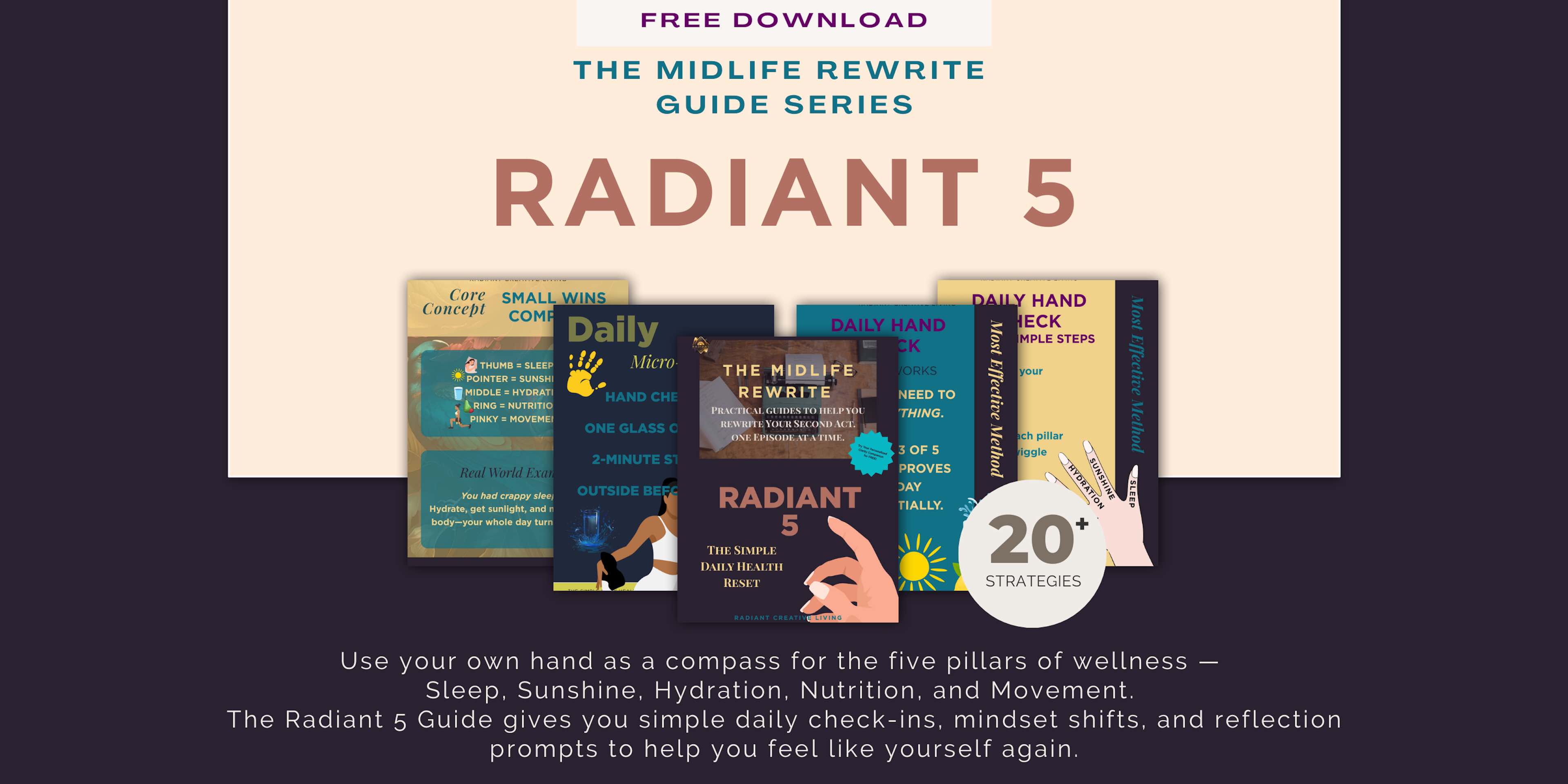
A: Download your free resource: Radiant Rhythm Method Guide or Radiant 5 Guide for instant access to the full frameworks, trackers, and actionable templates.
Want More Support?
- Explore the entire Radiant Creative Podcast collection for fresh interviews on midlife, ADHD, and creative reinvention.
- Grab all of our free tools and resources to help you thrive through every cycle.
- Or, try GLORIA, our always available, always supportive AI midlife guide. She's lots of fun and is trained on all of our systems and processes and is learning every week.
Sources
[1] ADHD and Sex Hormones in Females: A Systematic Review - PMC https://pmc.ncbi.nlm.nih.gov/articles/PMC12145478/
[2] ADHD and Your Menstrual Cycle - WebMD https://www.webmd.com/add-adhd/adult-adhd-menstrual-cycle
[3] ADHD during the perimenopause & Menopause https://www.menopausespecialists.com/post/adhd-during-the-perimenopause-menopause
[4] How Hormones Turn Up the Volume on ADHD Symptoms https://mamayahealth.com/how-hormones-impact-adhd-symptoms-in-women/
[5] Menstrual Cycle Phases and ADHD: Why Cycle Syncing Is Essential https://www.additudemag.com/menstrual-cycle-phases-cycle-syncing-adhd/
[6] How Menstrual Periods Can Affect ADHD Symptoms and Treatment https://www.scientificamerican.com/article/adhd-symptoms-can-fluctuate-with-the-menstrual-cycle/
[7] A guide to hormones and ADHD - Understood.org https://www.understood.org/en/articles/adhd-hormones-women
[8] Understanding ADHD and Menstrual Cycles: Insights on Symptom ... https://www.theminiadhdcoach.com/living-with-adhd/adhd-and-menstrual-cycle
[9] Radiant-Rhythm-Method.pdf https://ppl-ai-file-upload.s3.amazonaws.com/web/direct-files/attachments/8878864/daef2450-85e4-4ec6-9dec-81c0b05d8f2a/Radiant-Rhythm-Method.pdf
[10] Radiant-5-11-AUG-25.pdf https://ppl-ai-file-upload.s3.amazonaws.com/web/direct-files/attachments/8878864/b79e0711-4368-40ce-ac83-aa0291e282c3/Radiant-5-11-AUG-25.pdf